
STORM DAMAGE AND WATER INTRUSION SPECIALISTS
Chimney Leak Repair in Dallas-Fort Worth
Fast leak diagnosis, crown repair, and chimney waterproofing across the DFW Metroplex since 2010.
DFW Chimney Specialist repairs leaking chimneys across Dallas, Plano, Frisco, McKinney, and the surrounding DFW Metroplex. When water shows up on a ceiling after a North Texas storm, the chimney is one of the first places to check. Our certified technicians trace the leak to its actual source, whether that is a cracked crown, failed flashing, worn mortar, or a missing chimney cap, and stop the water before it does more damage to your home.
We have been doing this since 2010. Every leak repair starts with a real diagnosis, not a guess. We show you photos of what we find, explain how the water is getting in, and quote the repair before any work begins. No surprise charges. No upselling. If your chimney only needs a minor fix, that is exactly what we will tell you.
Our Inspection and Repair Process
1
Schedule
Free in-home appointment with same-week availability across DFW.
2
Inspect
A certified technician traces the leak with a full exterior and interior check.
3
Diagnose
You get a written report with photos of the damage and its exact cause, sent same day.
4
Repair
We fix the leak and waterproof the chimney, all quoted in-house before we start.
Where chimney leaks come from
Water gets into a chimney in more ways than most homeowners expect. A leak that shows up as a stain on your living room ceiling often starts several feet away at the top of the chimney, then travels down through the brick and framing before you ever see it. These are the sources we find water coming in from most often.
Cracked chimney crown
The concrete slab at the very top of the chimney is your first line of defense against rain. Hairline cracks let water seep straight into the masonry below, and North Texas heat and cold widen those cracks a little more every season.
Failed or rusted flashing
The metal seal where the chimney meets the roof is the single most common leak point we find. Once the flashing lifts, corrodes, or pulls away from the shingles, water runs directly into the roof deck and down the walls.
Worn brick and mortar
Brick and mortar are porous. As mortar joints erode and the masonry loses its seal, the chimney soaks up rain like a sponge and holds moisture against the interior of your home.
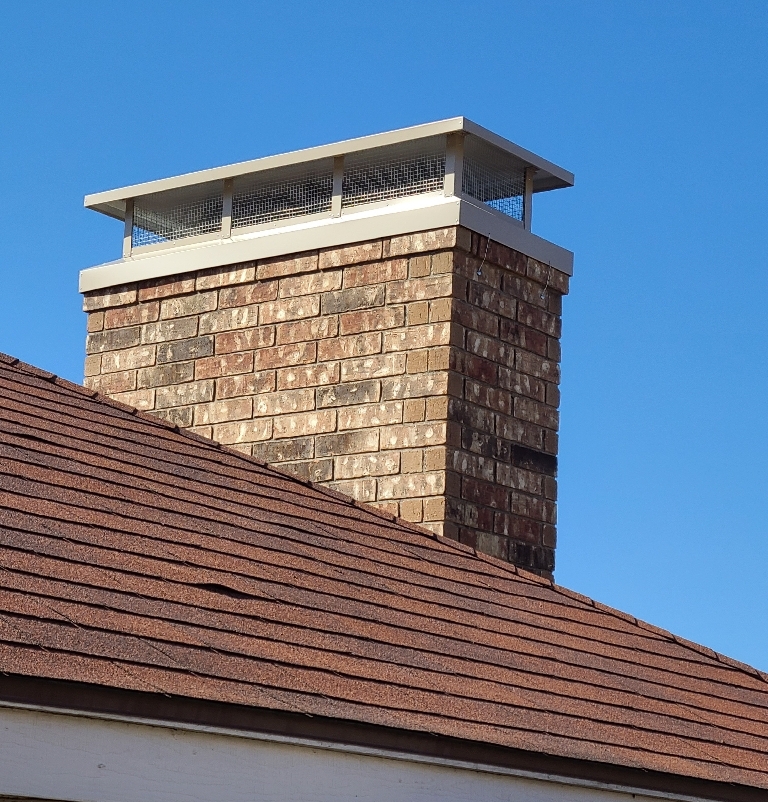
Missing or damaged chimney cap
An open flue is an open drain. Without a cap, rain falls straight down into the chimney, rusting the damper and firebox and carrying moisture into the smoke chamber.
Condensation inside the flue
Switching from a wood-burning fireplace to gas without the right liner can cause moisture to condense inside the flue, which shows up as staining and a damp smell even when it has not rained.
When you need chimney leak repair
Chimney leaks rarely fix themselves, and the longer water moves through the masonry, the more expensive the repair becomes. If you notice any of the following, it is time to have the chimney looked at.
- Right after a hailstorm, windstorm, or heavy rain, especially if other roof damage turned up
- Water stains on the ceiling or walls near the fireplace
- A damp or musty smell around the firebox that lingers after it rains
- White, chalky staining (efflorescence) on the exterior brick
- Rust on the damper, firebox, or metal chimney components
- Dripping or trickling sounds inside the chimney during rain
- Spalling, flaking, or crumbling brick on the chimney exterior
- A previous leak that was patched but keeps coming back
Not sure whether what you are seeing is a chimney leak or a roof problem? Give us a call at (214) 883-8876. We will tell you honestly, and if the water is coming from somewhere other than your chimney, we will point you in the right direction.
What we check during a leak inspection
Finding a leak means checking every point where water can enter, not just the obvious one. Your written report includes findings, photos, and clear next-step recommendations for each item below.
- Chimney crown for cracks, gaps, and pooling
- Flashing and counter-flashing seal at the roofline
- Brick face and mortar joints for water absorption and erosion
- Chimney cap, spark arrestor, and top seal
- Flue liner condition and gaps
- Firebox and damper for rust and standing moisture
- Interior walls and ceiling near the chimney for active staining
- Attic space around the chimney chase where accessible
- Efflorescence and salt deposits on exterior masonry
- Roof shingles and underlayment adjacent to the chimney
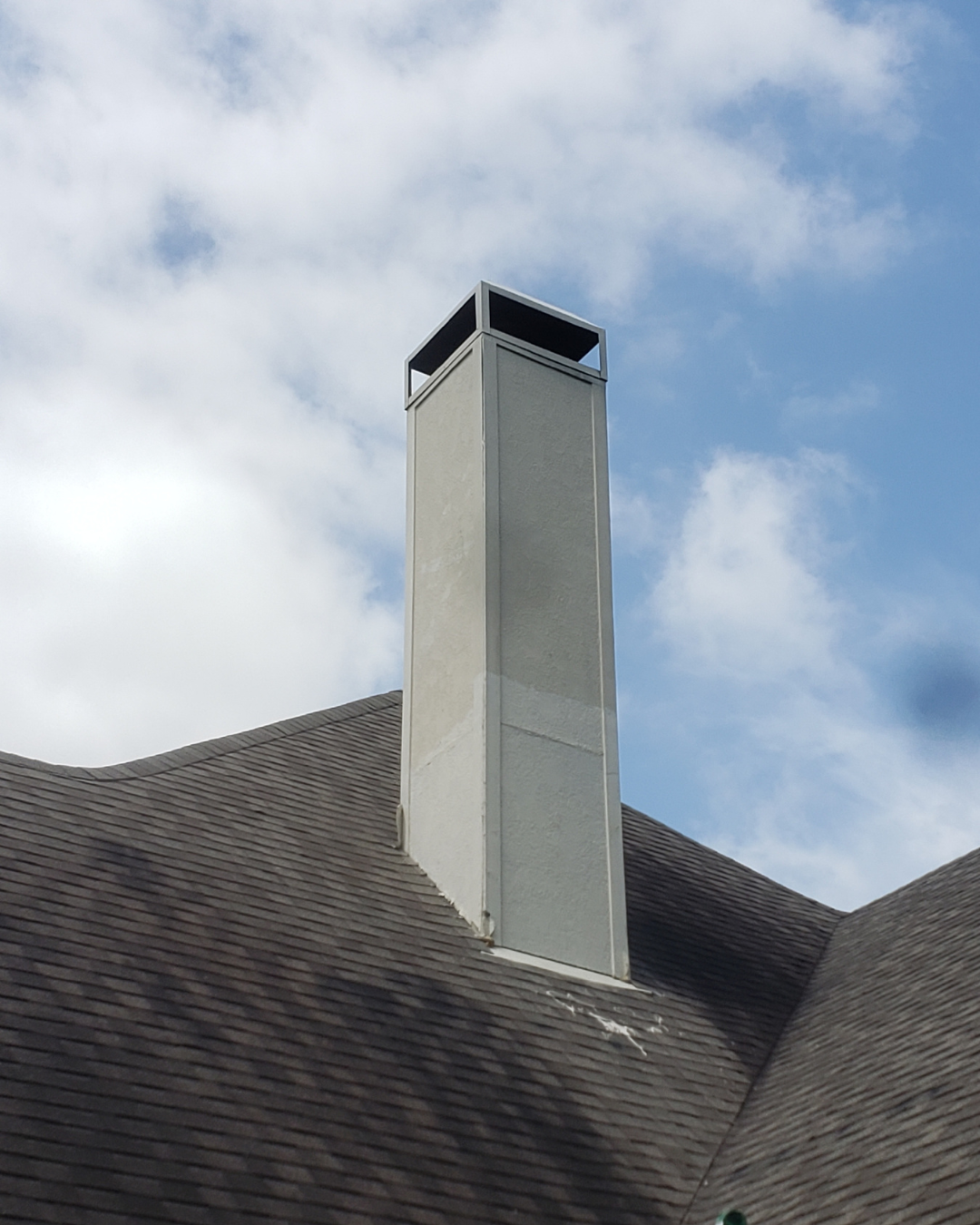
- Chase cover and top pan on prefab and factory-built chimneys
- Caulking and sealant at all joints and penetrations
- Grade and slope of the crown wash
- Existing waterproofing and where it has worn off
Common leaks and repairs we find
Most leaking chimneys we inspect across DFW come down to a handful of repeat causes. North Texas weather is hard on masonry, and these are the fixes we quote most often.
- Cracked chimney crowns, often hairline at first and easy to seal when caught early
- Rusted, lifting, or improperly installed flashing at the roofline
- Deteriorated mortar joints that need repointing or tuckpointing
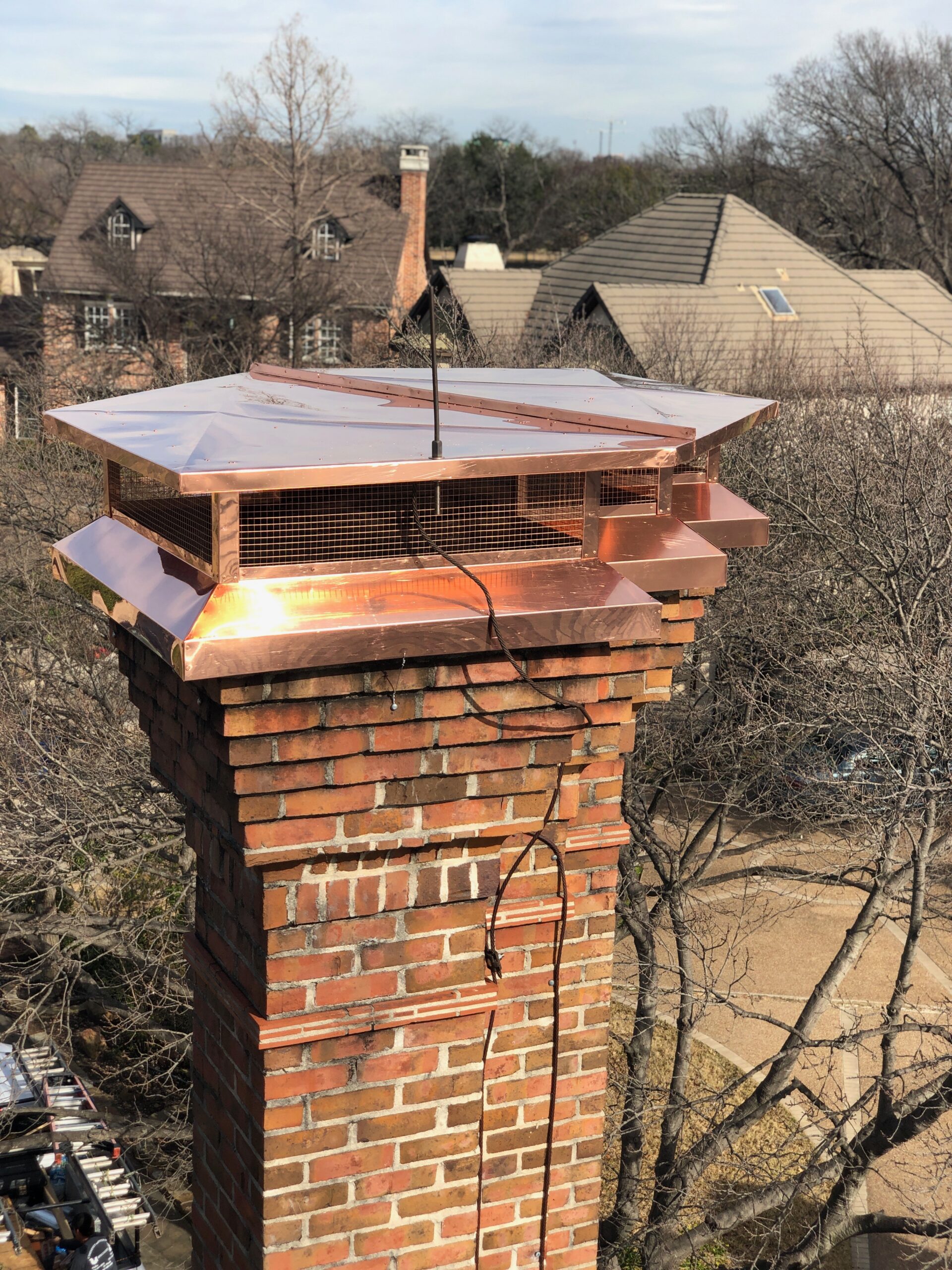
- Missing or storm-damaged chimney caps
- Unsealed, absorbent masonry that needs full waterproofing
- Chase covers with standing water, rust holes, or failed seams
- Efflorescence that signals water is already moving through the brick
- Damaged crown wash that no longer sheds water away from the flue
If we find something during your inspection, we will show you the photos, explain what is causing the water to get in, and quote the repair in-house. No surprise charges. No upselling. If your chimney does not need repairs, we will tell you that too.
Chimney waterproofing
Once a leak is fixed, waterproofing keeps it fixed. Chimney waterproofing seals the brick and mortar against rain while still letting the masonry breathe, which is the part that matters. A sealant that traps moisture inside the brick does more harm than good, so we use vapor-permeable products made for chimneys that block water coming in and let any trapped moisture escape.
This step matters in North Texas because our masonry takes a beating. Summer heat, sudden freezes, and driving spring storms pull water into the brick and force it back out again, and every cycle widens the cracks. Waterproofing a sound chimney is one of the least expensive things you can do to prevent a leak before it starts, and it typically protects the masonry for several years before it needs to be reapplied.
We waterproof chimneys as a standalone service and as the final step after a crown or masonry repair. If your brick is already showing efflorescence or spalling, we will tell you whether waterproofing alone will hold or whether the masonry needs repair first.
Chimney crown repair
The crown is the concrete or mortar slab at the top of the chimney that sheds rain away from the flue. It takes the full force of the weather year-round, so it is often the first thing to fail. When the crown cracks, water runs straight down into the masonry and the flue, and a small crack today becomes a full leak after the next hard freeze.
For crowns with hairline cracks caught early, we seal the surface with a flexible crown coating that bridges the cracks and stops water from getting through. For crowns that are badly cracked, crumbling, or poured too thin to begin with, sealing is not enough, and we rebuild the crown with a properly sloped, overhanging wash that carries water clear of the brick below.
Every crown repair starts with photos and an honest recommendation. We will tell you whether your crown needs a simple seal or a full rebuild, and we will never quote a rebuild on a crown that only needs a coating.
Why DFW Homeowners Trust Us
Founded in 2010 by company owner Robert Welch, DFW Chimney Specialist has grown into one of North Texas’s most trusted chimney service companies. We use our own W2 employees, never subcontractors, so the technician on your roof is trained, insured, and accountable to us.
15,000+
Inspections & service calls completed
4.9 ★
From 450+ Google reviews
15+ Years
Of trusted DFW expertise
Our chimney leak repair service area
We repair leaking chimneys across the entire Dallas-Fort Worth Metroplex, including:
✓ Dallas
✓ Plano
✓ Frisco
✓ McKinney
✓ Highland Park
✓ Southlake
✓ Allen
✓ Richardson
✓ Carrollton
✓ Farmers Branch
✓ Fort Worth
✓ Prosper
Frequently Asked Questions
After a hail or wind storm, the most common leak points are the flashing where the chimney meets the roof and the crown at the top. Storm impact can lift flashing, crack a crown, or blow off a chimney cap, and any of the three lets water straight into your home. A leak inspection traces it to the exact source so the right thing gets fixed the first time.
It depends on the source. Sealing a hairline crown crack or replacing a chimney cap is a minor repair, while rebuilding a crown, replacing flashing, or repointing mortar costs more because of the materials and labor involved. We diagnose the leak, show you photos, and quote the exact repair in-house before any work begins, so there are no surprises.
A quality vapor-permeable sealant applied to sound masonry typically protects a chimney for several years before it needs to be reapplied. Chimneys that see the worst of the North Texas sun and storms may need it sooner. We check your existing waterproofing during the inspection and tell you where it has worn off.
A crown repair, or crown seal, coats an intact crown that has hairline cracks with a flexible sealant that bridges the cracks. A rebuild is needed when the crown is badly cracked, crumbling, or was poured too thin, and involves removing and re-pouring the slab with a proper slope and overhang. We only recommend a rebuild when a seal will not hold.
Yes. We diagnose leaks year-round, and many interior repairs and sealing jobs can be done in cold weather. Some masonry and crown work depends on temperature, so if a repair needs to wait for the right conditions, we will tell you and give you a plan to keep water out in the meantime.
In most cases, yes. Leaks are urgent, and we keep same-week availability across the DFW Metroplex. Call (214) 883-8876 or request a quote online and we will get a technician out to find the source before the next storm.
READY WHEN THE NEXT STORM HITS
Stop the leak before it does more damage
Call (214) 883-8876 or request a free quote online. Same-week availability across most of the DFW Metroplex.
What do our customers say about us? — Over 475 Google reviews